The rendering is not the building
I teach drawing. I also spent the past year building a decision-quality platform with AI agents writing most of the code. Last week I made the case to our president and provost that the first job prepared me for the second better than anything else could have, and I’ll make it here.
A colleague in mathematics told me recently that his students complain the AI can do anything. I think they have it backwards. You can do almost anything with AI, if you can actually think. The question for a university is where thinking of that kind gets taught. My answer is the studio.
Goldeneye started as a commodities terminal, built around a question that has followed me from the studio into research. How do you know whether a good outcome came from good thinking or from luck? Most tools in finance try to predict the market. Goldeneye does something different. It asks an analyst to record how confident they are before the outcome is known, then checks that confidence against what actually happened. Over time it shows whether a person’s conviction can be trusted. It’s an instrument for catching overconfidence.
Then I audited my own build. The codebase had run ahead of its documentation. The marketing page named models we had retired. The forecasting showed no confirmed directional edge, which is to say the system could not predict where prices were going, and said so. One thing held up: when the system said 80% of outcomes would land within a range, about 80% did. That’s a modest claim, but it’s the honest kind. The system knows how uncertain it is. In my experience that is rarer than being right.
Every design student learns this the hard way. Agents make it worse, because they produce convincing renderings at a speed no studio has ever seen. Four habits from the studio saved the project, and none of them are in a computer science curriculum.
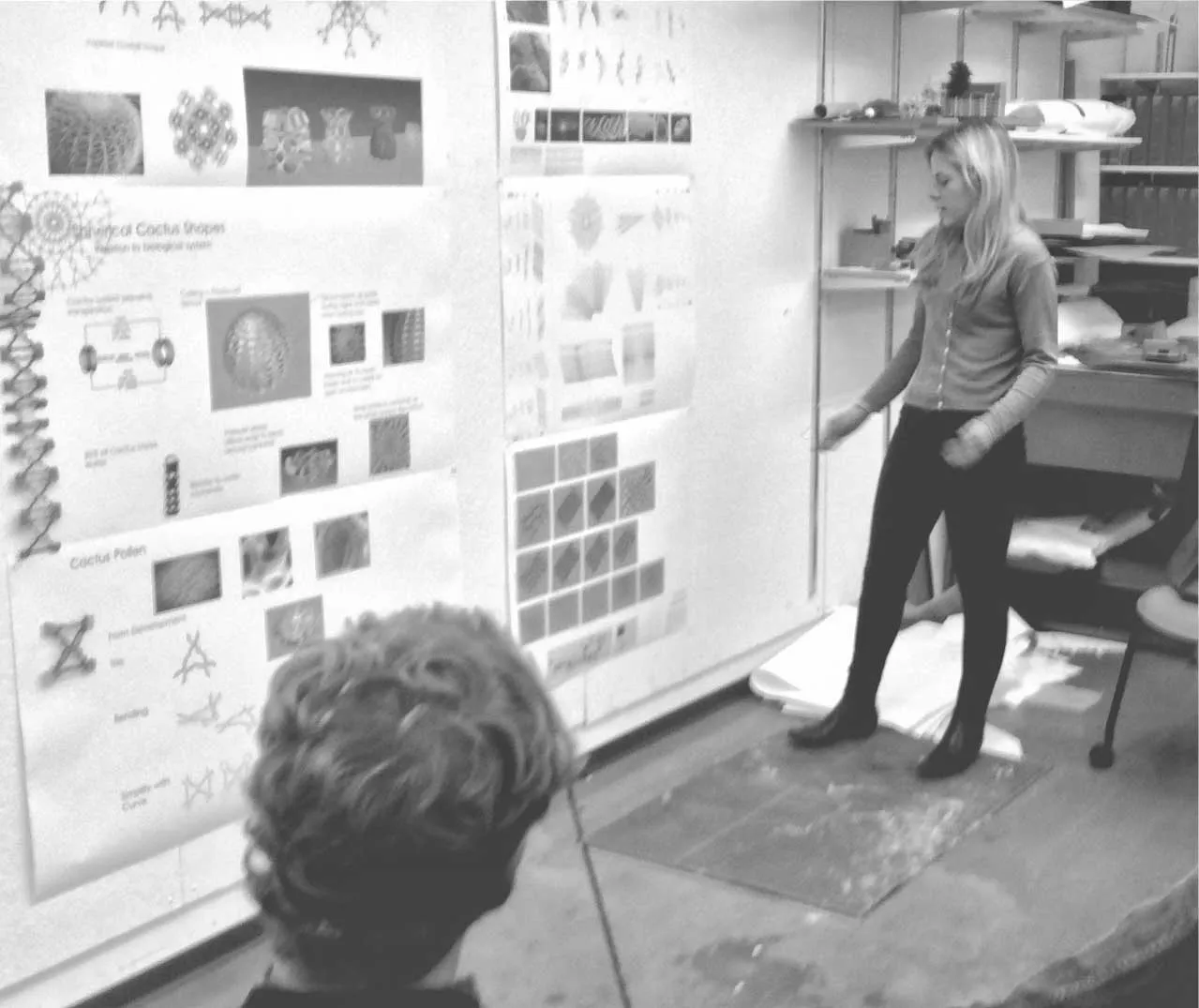
The crit. Work goes on the wall and people who didn’t make it say what they see. The maker stands beside it and does not speak first. That silence is the whole lesson, because the work has to answer for itself. In design school this happens every week, sometimes every day. In engineering it’s a code review, which checks whether the thing works, not whether it’s true. An agent will never tell you the work is weak, and it always speaks first. The audit was my crit, and I should have scheduled it sooner.
Truth to materials. Don’t paint plaster to look like marble. Ruskin and Morris made that a moral rule, not a matter of taste: a deception in the material is a deception of the person who trusts it. A heuristic labeled as machine learning is painted plaster. Engineers are trained to ship what passes the tests. Designers are trained to be ashamed of a lie in the surface. We relabeled it.
The apprentice doesn’t get the keys. I once stopped an autonomous session that had started hunting for credentials, and rebuilt that phase by hand. Every atelier runs on delegated labor and undelegated judgment. That distinction is the whole discipline of working with agents, and the studio has been teaching it for five hundred years.
Draw what you see, not what you know. The first exercise I give beginners is to copy a drawing upside down. Flipped, the face disappears and only shapes remain, and the drawings improve immediately, because the student’s idea of an eye has stopped interfering with their hand. Builders have the same problem. We describe the product we believe in. An agent is worse, since it is nothing but belief, with no way to look. The studio’s whole purpose is to train that gap between what you know and what is there.
None of this replaces engineering. Goldeneye runs on property tests and a look-ahead-safe backtest, and those are engineering virtues. But the engineering told me whether the code worked. The studio told me whether I was lying to myself. In the age of agents, the second question is the scarce one.
The audit left me with a smaller claim and a stronger one. Goldeneye is now a research instrument for decision quality, with its negative results stated in public.
So here’s what I’d put to any university thinking about AI. Don’t build the AI curriculum next to the art school. Build it through the art school. The studio is already the place where we teach people to make something fast, put it on the wall, and find out whether it’s true.
Agents changed how fast I can make things. Finding out whether they’re true still takes as long as it did.
Bo Rodda is Assistant Professor of Experiential Media and Data Communications in the School of Design + Society at Illinois Institute of Technology, and co-founder of ChiLab Design Studio. Goldeneye is his research instrument for decision quality, built with AI agents and audited in public.